Many homeowners looking at their windows from the outside of their home in bright sunlight notice that reflections of trees, rooftops, fences, or neighboring houses appear wavy or slightly distorted. This is not necessarily a sign that the glass is warped or defective.
Modern windows are manufactured to strict quality standards, but the processes used to strengthen glass and improve energy efficiency can create subtle visual effects that become noticeable under certain conditions. In most cases, these distortions have no impact on the window's strength, performance, or lifespan.
Distortion in Tempered Glass
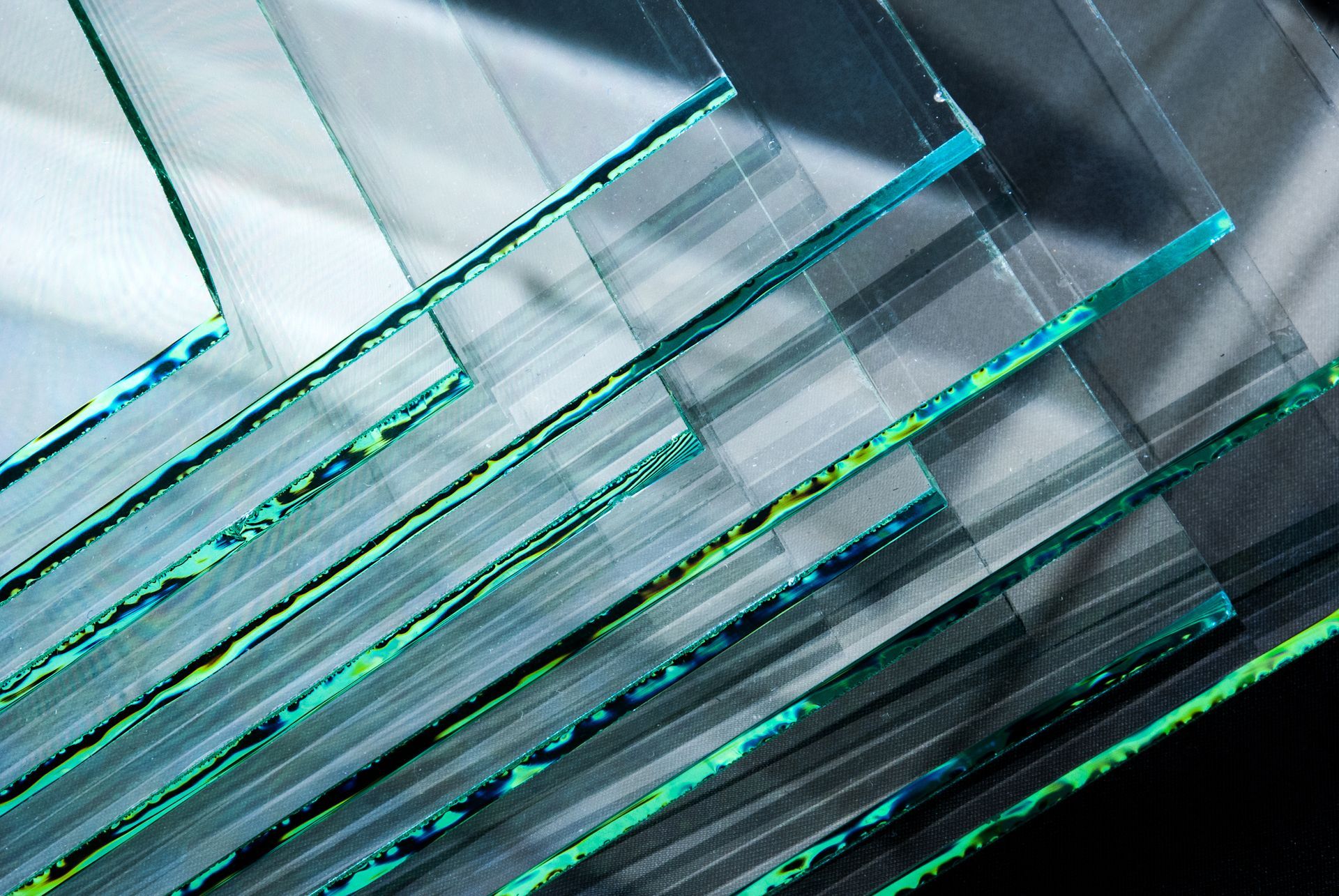
Tempered glass is heat-treated to make it significantly stronger than standard annealed glass. If it does break, it shatters into small, rounded pieces instead of dangerous sharp shards, making it an important safety feature in many areas of the home, such as near patio doors, bathrooms, stairways, and large windows.
During the tempering process, the glass is heated to extremely high temperatures and then rapidly cooled. This process creates internal stresses that strengthen the glass, but it can also produce slight optical distortions that become visible under certain lighting conditions.
These distortions are considered a normal characteristic of tempered glass and generally do not indicate poor quality or improper installation.
What Is Roller-Wave Distortion?
As the glass moves through the tempering furnace, it travels across ceramic rollers while softened by heat. Because the glass is flexible during this stage of manufacturing, very small variations can develop where it contacts the rollers.
The result is an almost imperceptible ripple across the surface of the glass. Under everyday conditions, most homeowners never notice it. However, when sunlight reflects off the window at the right angle, straight objects like rooflines or fence posts may appear to bend or ripple slightly.
Although the name sounds concerning, roller-wave distortion is an expected byproduct of the tempering process and does not reduce the glass's strength, efficiency, or durability.
Why Reflections Change With Viewing Angle
Looking directly through the center of a window often provides a perfectly clear view. However, when you move to the side or observe the glass at an angle, reflected light becomes much stronger. Those reflections can exaggerate even the slightest surface variations, making the glass appear wavy.
The effect is especially noticeable when reflecting objects containing long, straight lines, like brick walls, rooflines, utility poles, or neighboring homes. As lighting conditions change throughout the day, the distortion may seem to appear and disappear, even though the glass itself hasn't changed.
Why Large Panes Make Distortion More Noticeable
Small variations that would be nearly invisible on a smaller window become easier to detect across a wide expanse of glass.
This doesn't mean large windows are lower quality. Instead, they simply provide a much bigger "mirror" for surrounding objects, making optical effects more visible.
Advances in modern manufacturing continue to improve glass quality, but no piece of architectural glass is perfectly free of optical variation.
Other Factors That Can Affect Appearance
Modern replacement windows often include Low-E coatings that improve energy efficiency by reflecting infrared heat while allowing visible light to pass through. These coatings can slightly change the way reflections appear depending on the angle of the sun.
Environmental conditions also play a role. Bright sunshine, blue skies, nearby landscaping, and reflective surfaces can all make slight optical distortions easier to notice than they would on an overcast day.
Even the position of the sun during different seasons may affect how noticeable these reflections become.
When Distortion Is Completely Normal
In most situations, slight waviness is simply a normal characteristic of modern window glass. Generally, there's no reason for concern if the distortion:
- Only appears in reflections
- Is visible primarily from certain angles
- Doesn't affect your ability to see through the glass
- Remains consistent over time
- Isn't accompanied by cracks or other visible damage
When It's Worth Having a Professional Evaluate the Window
Although minor distortion is expected, some situations deserve closer attention. You may want to have your windows inspected if you notice:
- Significant warping that obstructs visibility
- Glass that appears bowed or misshapen
- Distortion that suddenly develops after installation
- Fog or condensation trapped between panes
- Cracks, chips, or visible damage
- Drafts or water leaks around the frame
Get Expert Advice From Our Window Replacement Team in DFW, TX
If you have concerns about the performance of recently installed windows or are looking for a dependable window replacement company in Dallas–Fort Worth, call Window Zone at 469.557.6333 to schedule a consultation.